Grassification Final Activities

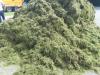
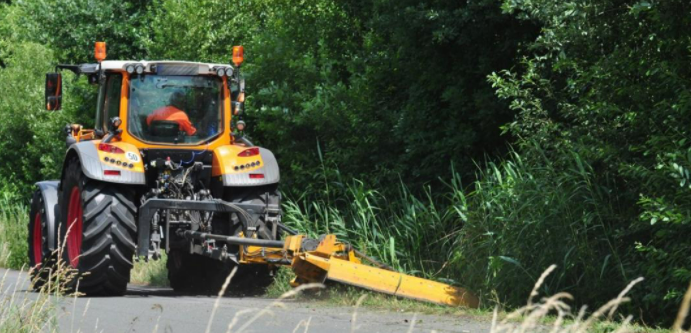
Even though the Grassification project will end on November, 2021, the project partners still have some exciting developments being carried out in these final months to make sure we cover the maximum amount of aspects to enable the use of roadside grass clippings as a resource! Check out below the ongoing activities and be sure to follow Grassification project website and newsletter to learn about the final outcomes. […]

Read More… from Grassification Final Activities

Outcomes of the Grassification webinar on valorisation of roadside cuttings

The Grassification project aims to turn the roadside cuttings from waste into a resource. The current valorization route is composting in the best case, but also non-legal practices like rotting alongside the roads are common. Recently, the consortium held a webinar on the valorisation of roadside grass cuttings to explore new and feasible solutions.  […]

Read More… from Outcomes of the Grassification webinar on valorisation of roadside cuttings

LIFE DOP :Demonstrative mOdel of circular economy Process in high quality dairy industry

The LIFE DOP project (Demonstrative mOdel of circular economy Process in  high quality dairy industry) is a EU project, located in Mantua district, in the middle of the cheese production chain, aiming to demonstrate a new production model for Grana Padano PDO (Protected Designation of Origin) and Parmigiano Reggiano PDO, able to reduce the environmental impacts of production. As literature clearly outlines, (Thoma et al., 2012, IPCC 2006) a relevant area of GHG emission in milk production is the management of slurry and of nutrients, and these are key areas in which is important to invest to reduce burdens. […]

Read More… from LIFE DOP :Demonstrative mOdel of circular economy Process in high quality dairy industry

Using waste nutrients to cultivate microalgae – Swansea team publishes new report

A Swansea University team has published a new article, detailing a novel approach to reuse food and farm waste at an industrial scale, using microalgae.

The paper explains the ways in which algae can be cultivated using excess nutrients, the optimum two-step approach used to maximise productivity, and how this biomass is optimally suited for use as an animal feed ingredient. […]

Read More… from Using waste nutrients to cultivate microalgae – Swansea team publishes new report

Circular Economy in action: Using digestate to cultivate microalgae for fish and animal feed

ALG-AD is exploring ways to develop a circular approach to microalgae cultivation, utilising the by products from the AD/biogas industry, to generate products of value for another.
The team have built three facilities which are already using the nutrients in digestate to cultivate microalgae.
So far, the ALG-AD team have focussed on production of biomass for use as an animal feed, however additional funding has been allocated to the team to expand on the work already done to also cultivate algae for use as a fish feed. […]

Read More… from Circular Economy in action: Using digestate to cultivate microalgae for fish and animal feed